Sri Lanka is not a country that announces its architecture.
There's no famous museum district, no branded design quarter. What's here is stranger and more interesting: a 2,500-year tradition of building in response to climate and landscape, a colonial layer that rewrote the cities without erasing what came before, and one man who spent a lifetime teaching the island to read its own spaces.
That man is Geoffrey Bawa. If you arrive with a trained eye, he's where you start.
GEOFFREY BAWA
Geoffrey Bawa (1919–2003) trained first as a lawyer, then changed course in his thirties to study architecture at the AA in London. He came back and spent the rest of his life building something entirely particular to this place: open, layered, local in material and international in reference. The belief at the centre of his work: a building should dissolve into its landscape, not impose on it.
He is the reason architects fly to Sri Lanka.
NUMBER 11, 33RD LANE · COLOMBO
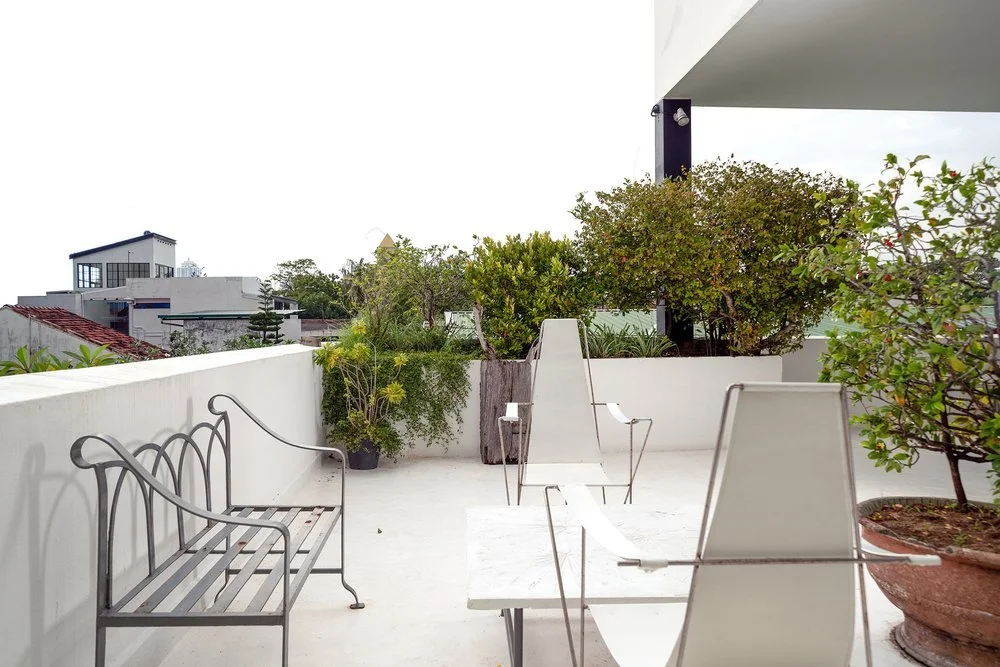
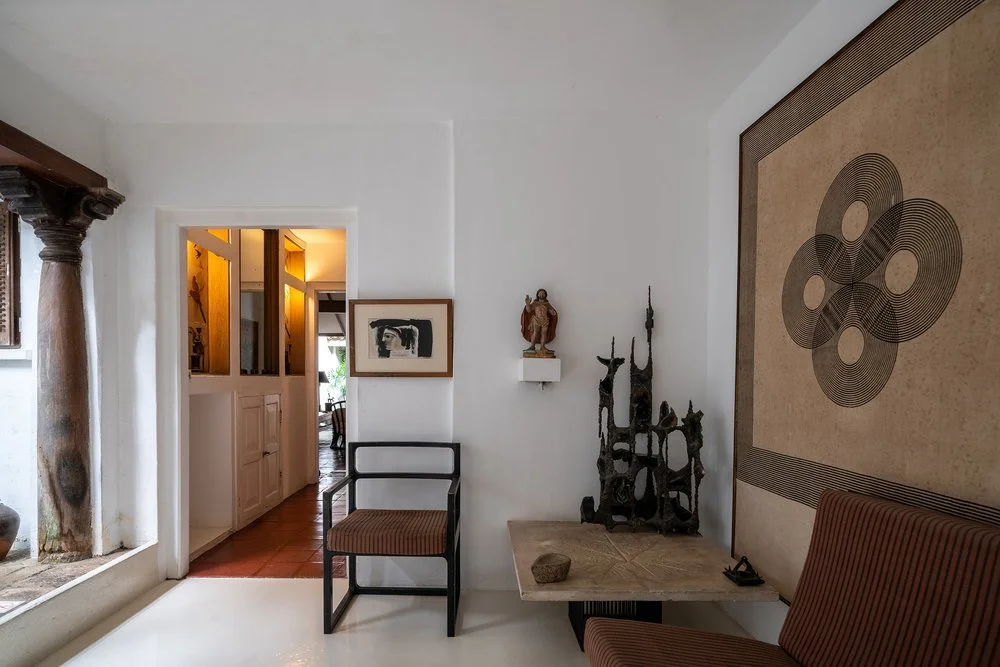
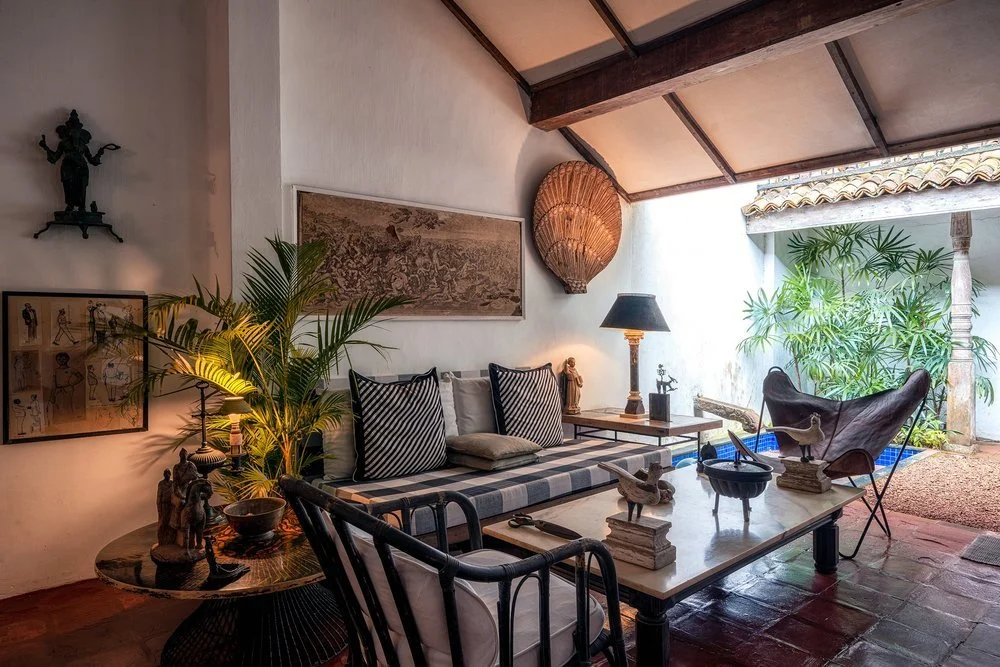
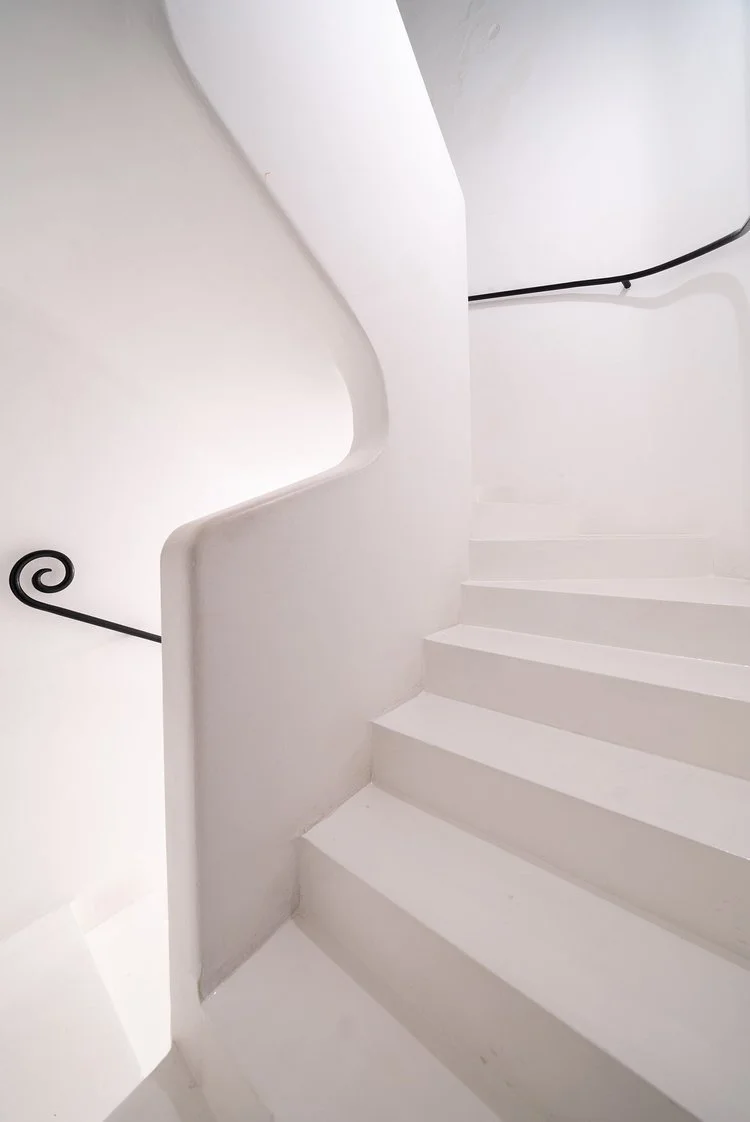
Start here. Bawa's townhouse and studio, built across four terraced houses he acquired over a decade and spent forty years slowly transforming. It works as a sequence: a narrow entry unfolds into a broad living space, which compresses again through a dining room, a bedroom, a terrace. Indoor and outdoor dissolve without announcement. You realise what's happened only after it already has.
Guided tours run multiple times daily. Book in advance at geoffreybawa.com.
LUNUGANGA ESTATE · NEAR BENTOTA
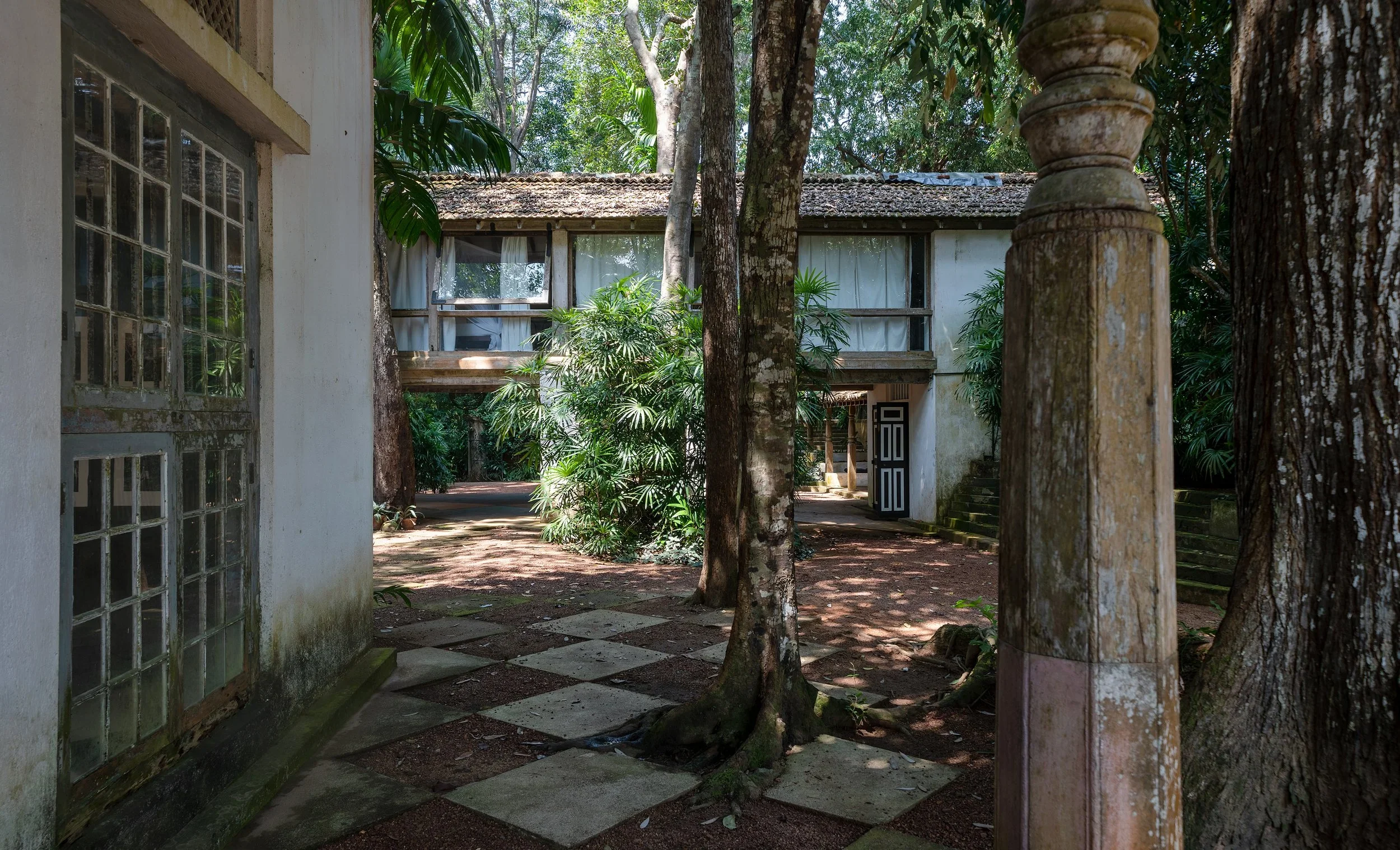
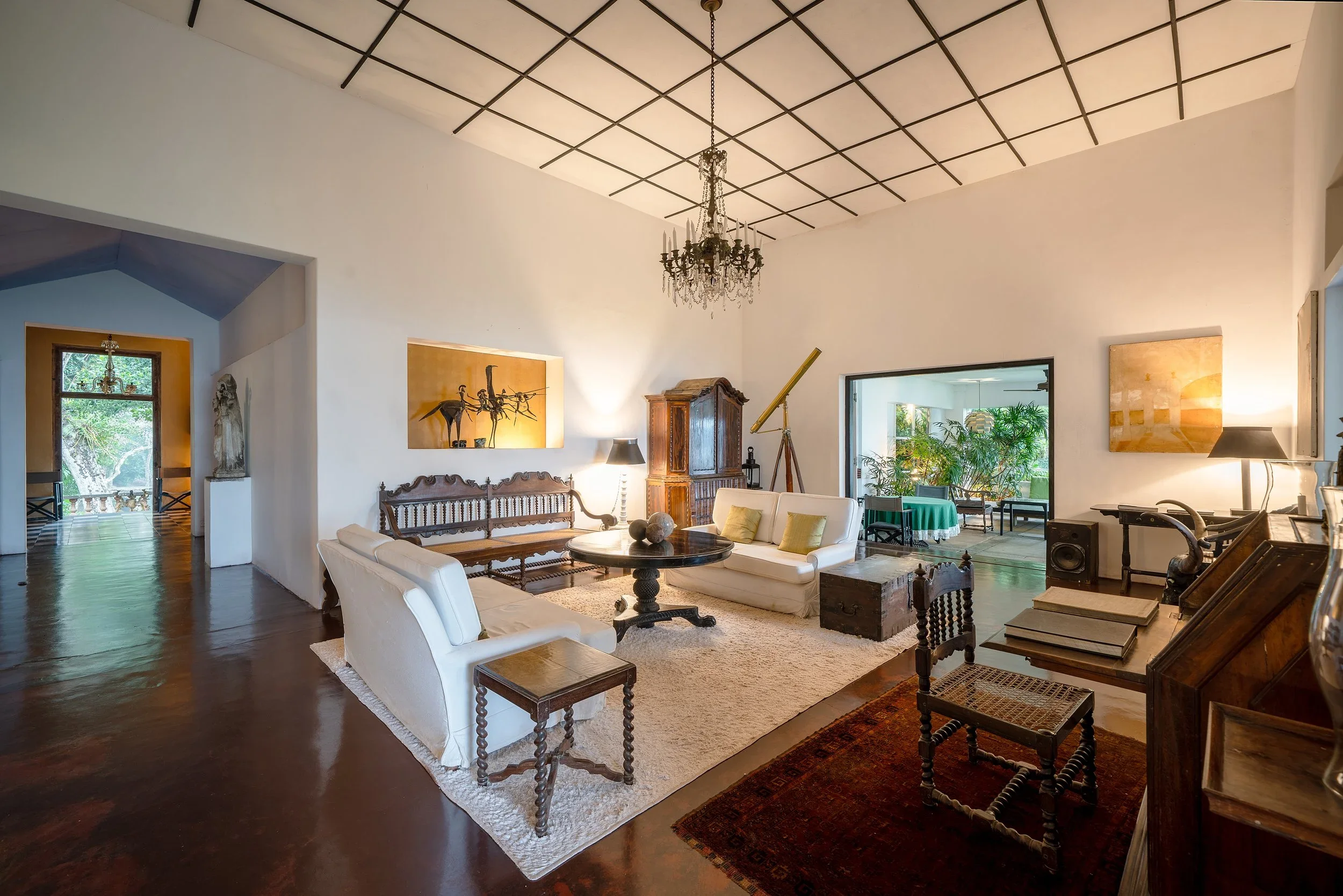
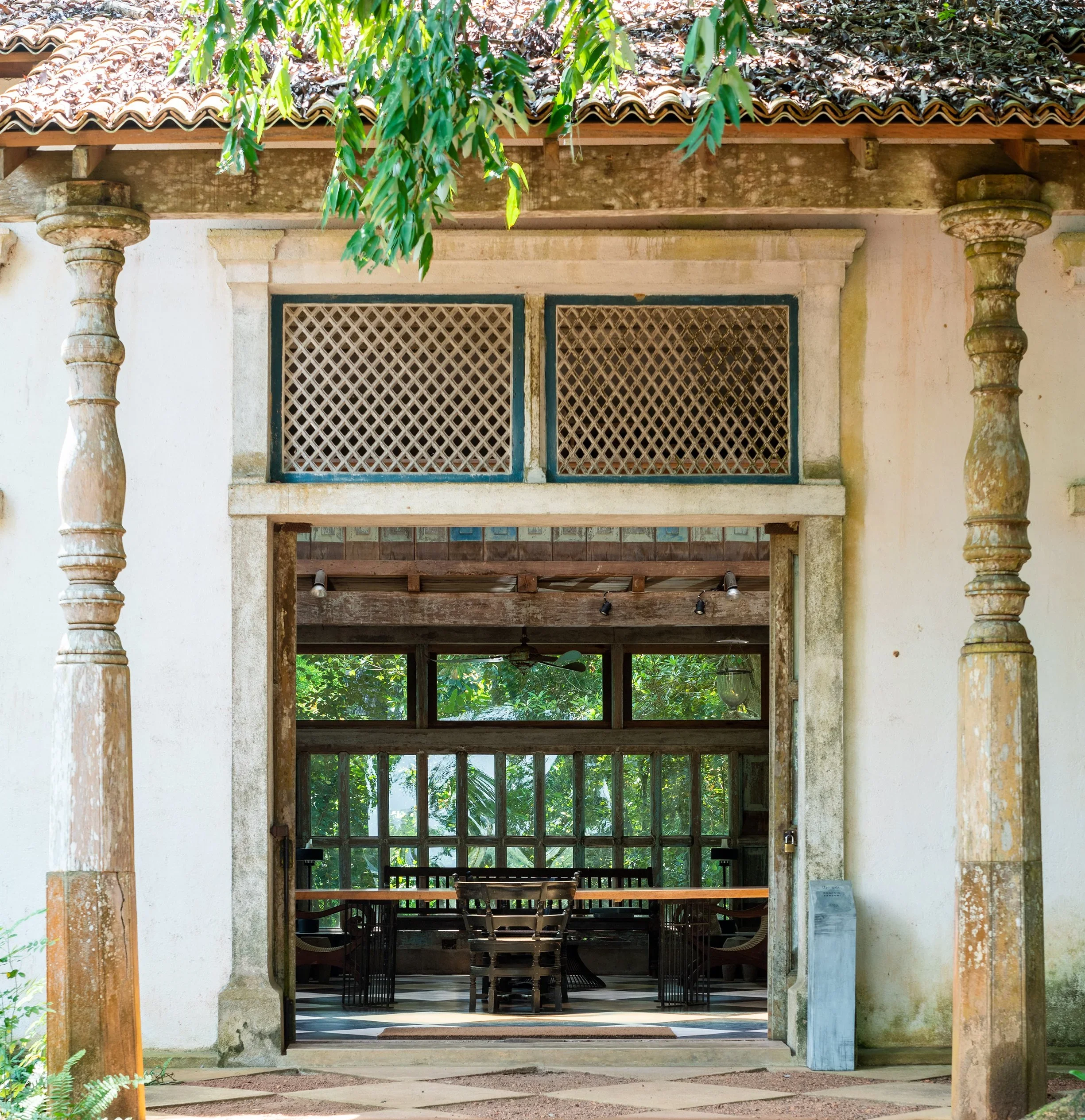
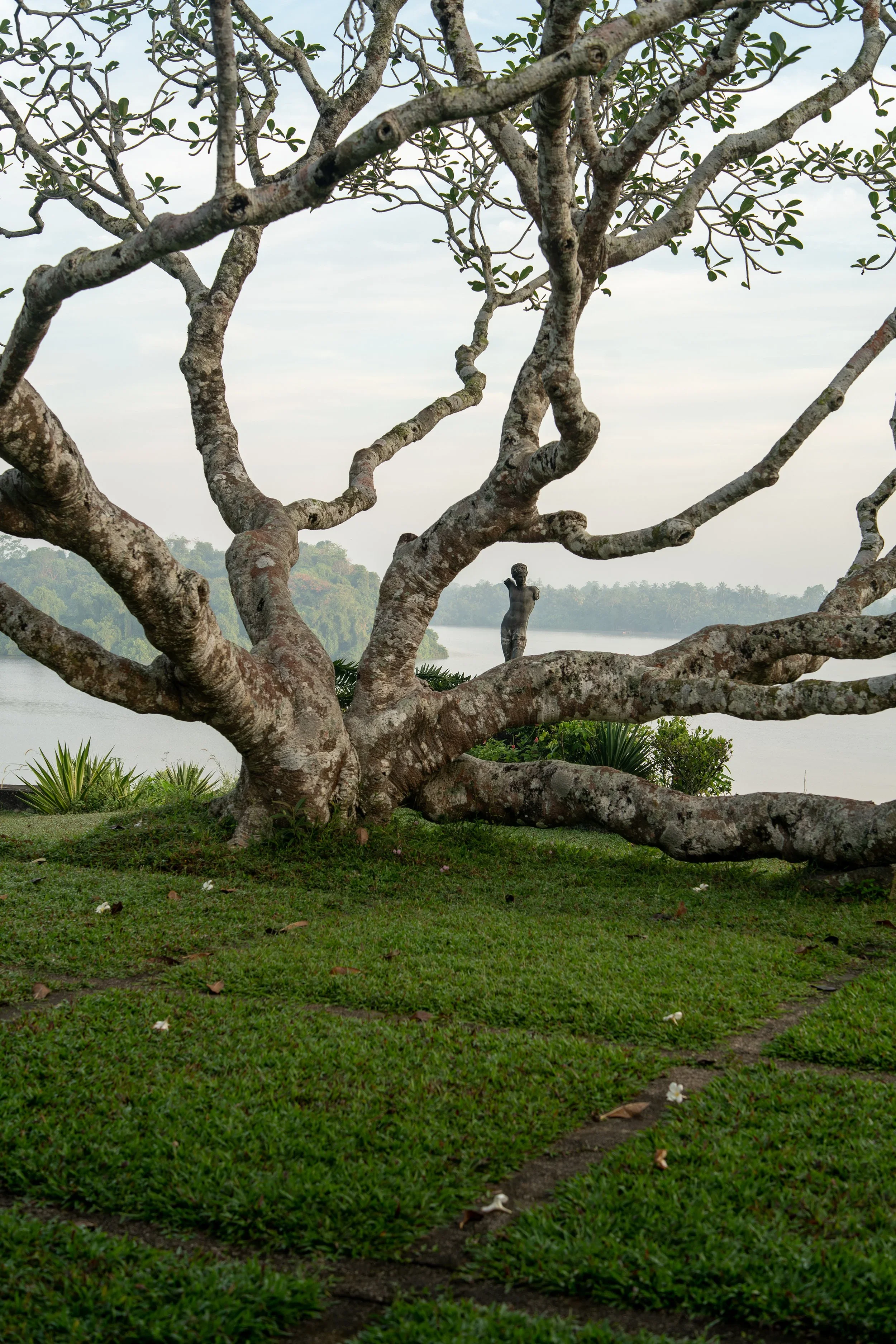
In 1948, Bawa bought a rubber and cinnamon plantation on a peninsula south of Colombo and spent fifty years transforming it into something that resists every category. Not a botanical garden. Not a designed landscape in any Western sense. Something more personal, what he described as "a garden within a larger garden," where the surrounding lakes make the land seem to go on forever.
Garden tours run daily without reservation. You can also stay. About ninety minutes from Colombo on the Galle Road. Reachable as a day trip from Ahangama.
HERITANCE KANDALAMA · NEAR SIGIRIYA
Bawa's major late-career work, opened in 1994. A hotel built into a granite rock face, and the first LEED-certified hotel in Asia. No trees were removed during construction. Animals pass freely underneath it. Local materials throughout: kaduru timber, terracotta. The corridor at the far end of the building, where the rock comes through the wall, is one of the more arresting spatial experiences on the island.
You don't visit this one. You stay.
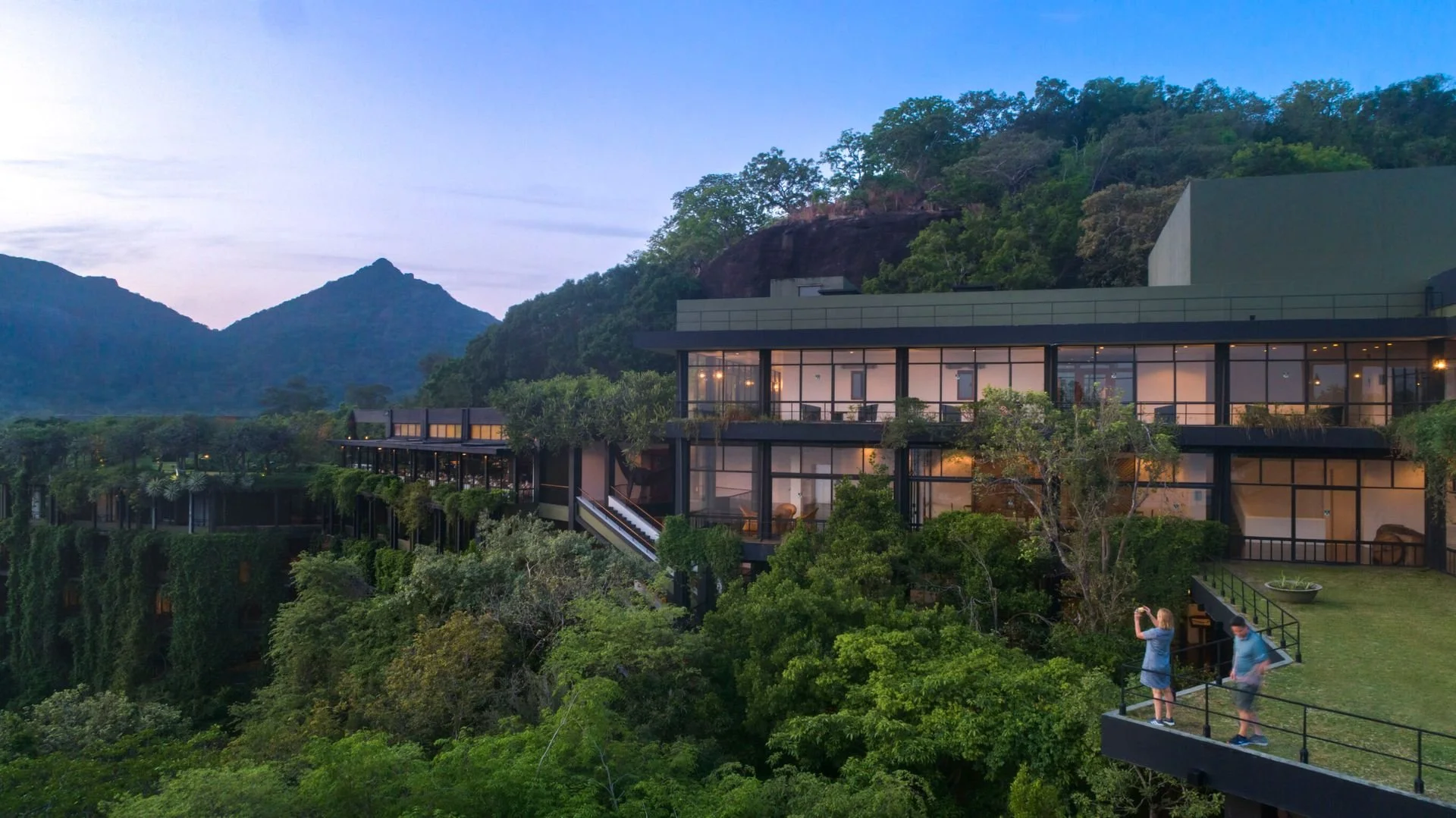
© Heritance Kandalama
The rest of the Bawa trail in Colombo
Three other Bawa spaces are worth knowing before you leave the capital. The Bawa Space at 42/1 Horton Place is itself a Bawa-designed building, completed in 1961 and now home to the Geoffrey Bawa Trust's archives, library and design store. Open Thursday through Saturday. A few minutes away on Ward Place, De Saram House is a 1986 renovation built around the life of a pianist: the music room is at the centre of the plan, which tells you something about how Bawa approached a brief. Managed by the Trust since 2019, it can be visited by appointment and slept in.
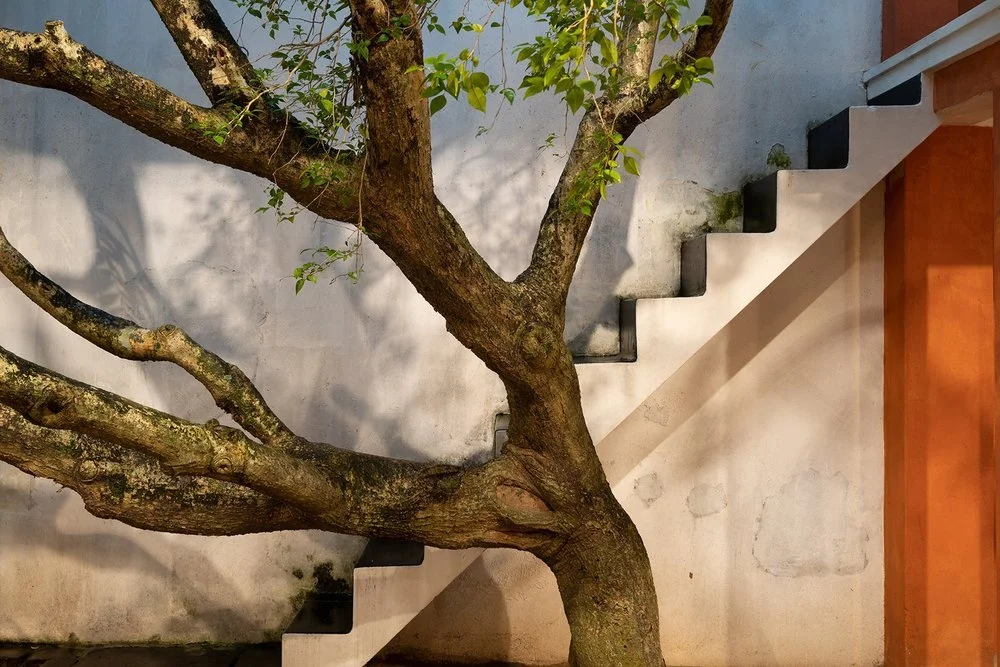
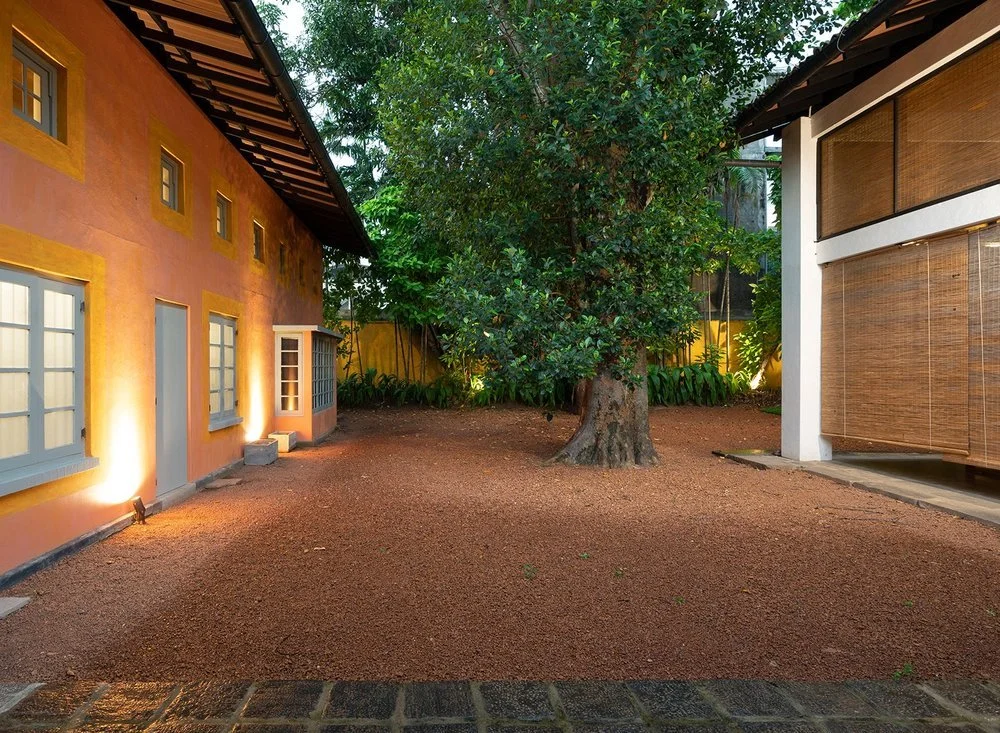
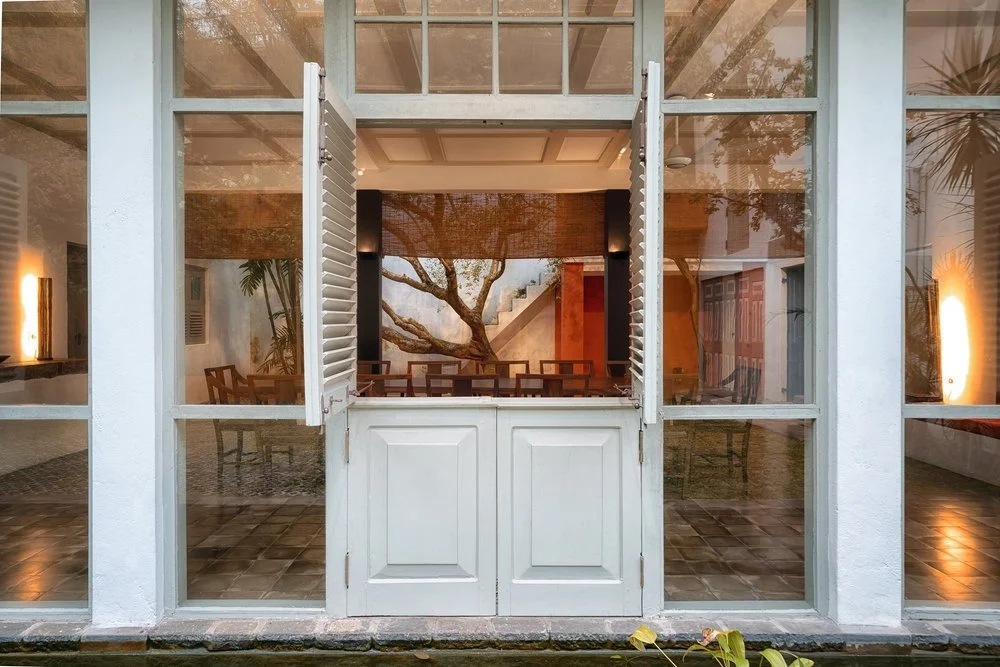
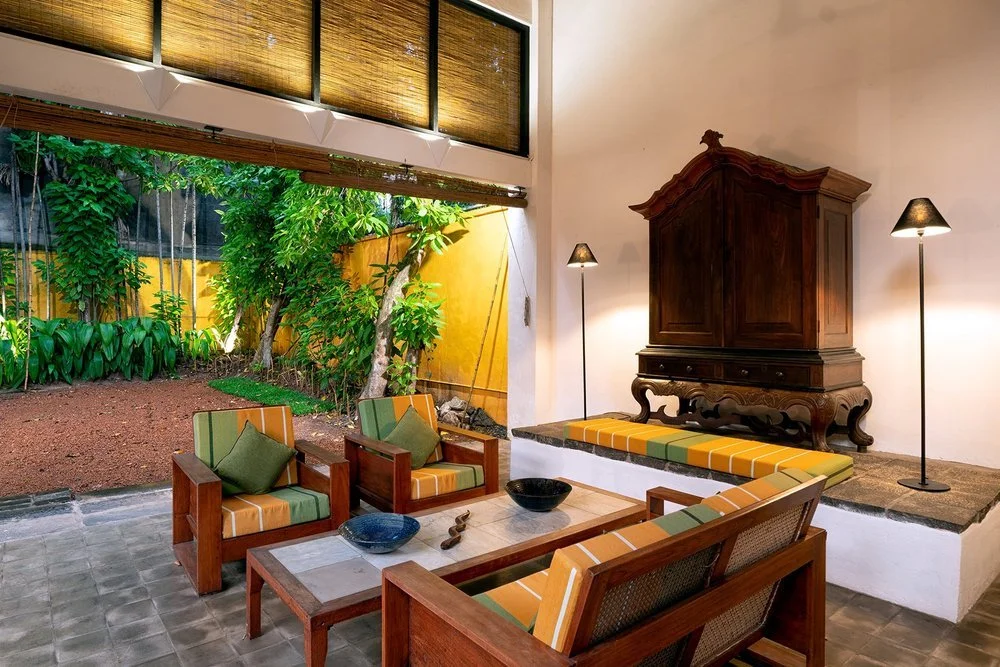
On Alfred House Road, The Gallery Café occupies his former office. No booking required. The quality of light in the main room is reason enough to stop.
Then go to Beira Lake. Seema Malaka Temple (1978) sits on an artificial island: three connected Buddhist pavilions on water, their rooflines referencing Kandyan temple architecture. One of Bawa's most spatially precise works in the city. Free to enter. Go in the morning.
Further south
Brief Garden, near Beruwela, is the garden of Bevis Bawa, Geoffrey's brother. More intimate, more layered, more theatrical than Lunuganga. Often skipped by travelers focused on Geoffrey's work. It shouldn't be.
On the south coast, The Last House in Tangalle was Bawa's final project, completed just before a stroke ended his working life. Minimal and stripped back. Worth the journey to the far south to understand what he chose to say at the end. A few kilometres before Galle, the Lighthouse Hotel is one of his more theatrical gestures: a monumental entrance staircase referencing Sri Lanka's maritime history, and interiors that keep his characteristic dialogue between light, water and landscape. Worth a stop for dinner at sunset even if you're not staying.
THE ANCIENT VOCABULARY
Before Bawa, this island produced some of the most geometrically precise structures in Asia. Understanding them gives the rest of the trip a longer frame of reference.
SIGIRIYA
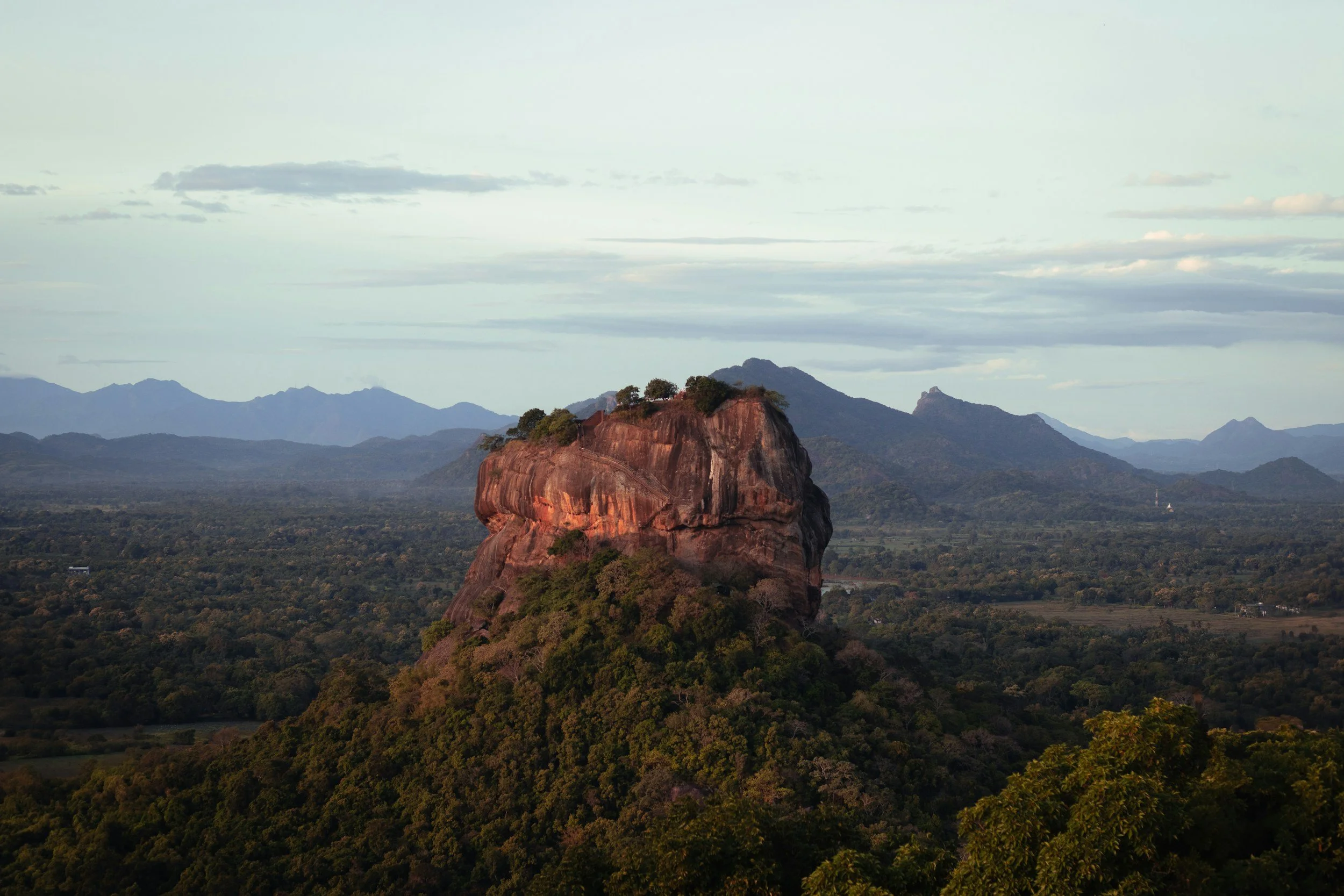
Not a ruin. A design problem. In the fifth century, a king carved a palace into the top of a 180-metre granite monolith and choreographed the approach: moats, formal water gardens with symmetric fountains still functional after fifteen centuries, a lion-paw gateway, the Mirror Wall, frescoes painted directly onto rock. The spatial sequence of the ascent is the project. Study the plan from the ground before climbing.
Entry fees and practical information are in our guide to Sri Lanka's UNESCO sites.
ANURADHAPURA
The stupas here are pure form. Hemispheres on square bases, white against the sky, scaled for visibility from kilometres away. The Jetavanaramaya was, at the time of its construction in the third century CE, the third tallest structure in the world. What registers for an architectural eye is not the height but the proportional system: nothing is arbitrary.
POLONNARUWA
Three Buddha figures carved from a single face of granite. The scale relationship between the reclining figure (fifteen metres) and the standing one beside it is calibrated, not incidental. Standing in front of it makes this clearer than any explanation.
DAMBULLA CAVE TEMPLES
Architecture inside rock. Five cave shrines with ceilings painted over centuries, beginning in the first century BCE. The spatial quality is different from everything else on the island: enclosed, dim, textured, then suddenly bright.
THE COLONIAL LAYER
GALLE FORT
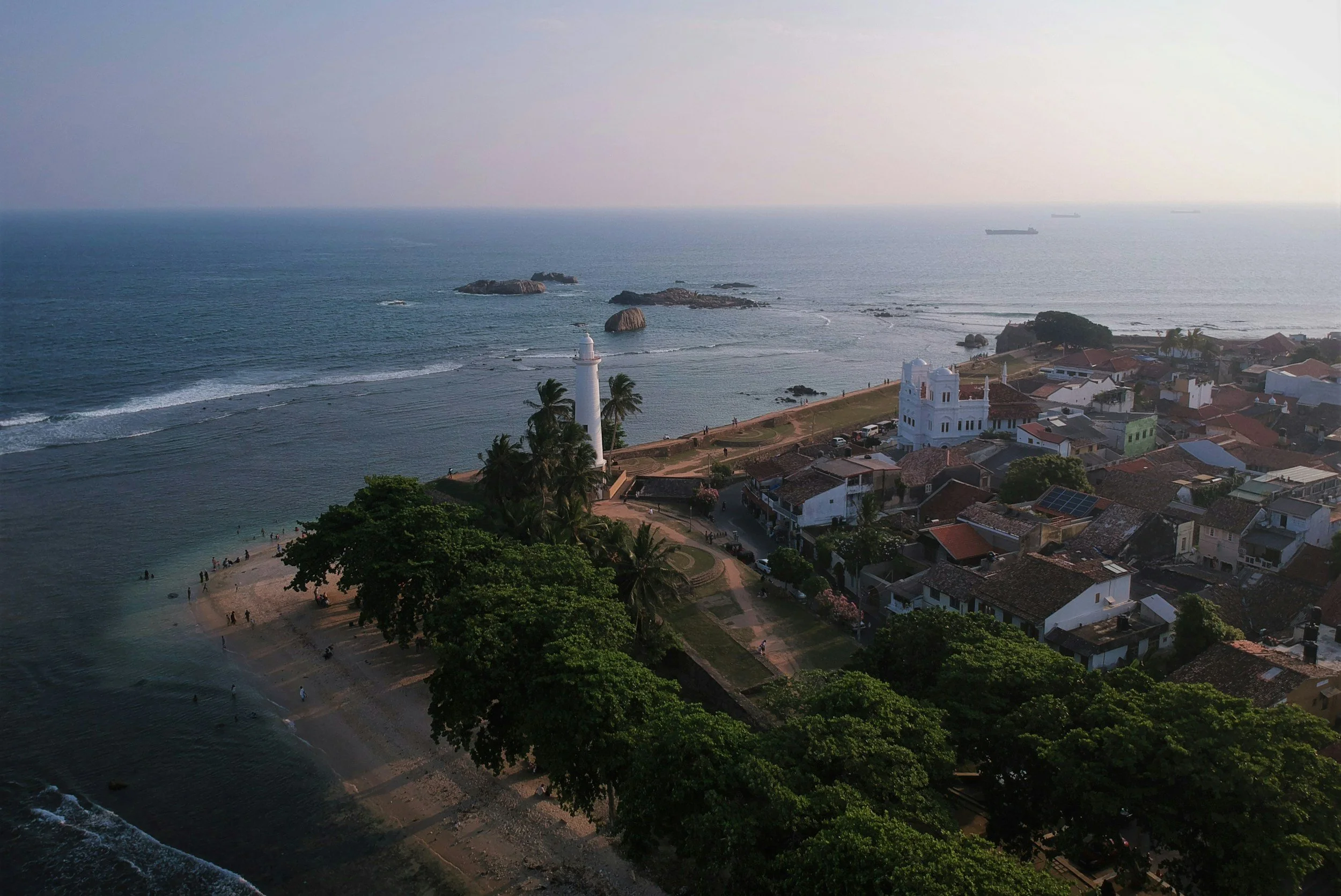
The Dutch built on the remains of the Portuguese. The British built on what the Dutch left. The result is a walled city on the southwestern tip of the island whose grid still functions: you can walk it in two hours and read colonial urban logic more clearly than almost anywhere in the region. The relationship between the fort walls and the Indian Ocean is the architectural fact.
NINE ARCH BRIDGE · ELLA
British colonial railway engineering in stone and brick, no cement. The absence of cement was reportedly circumstantial: material shortages during the First World War interrupted supply. Whether or not that origin story holds, the result is correct. The viaduct sits in the valley as if it were always there.
CONTEMPORARY ARCHITECTURE ON THE SOUTH COAST
Three buildings. One private. Two you can actually sleep in.
TADAO ANDO · MIRISSA
A private residence on the cliffs above Mirissa, commissioned by a Belgian industrialist. Exposed concrete, a glazed study and artist studio, three floors at the edge of the cliff above the Indian Ocean. Ando in a completely different climate and context from his Japanese and European work. Partially visible from the road and from the water.
SHIGERU BAN · MIRISSA
Villa Vista, completed in 2010. A villa on the cliffs above Mirissa, overlooking Weligama Bay. Bare concrete, local teak and coconut-leaf elements. Ban working with local craft inside a modernist structural logic. It can be rented through The Serendipity Collection.
K HOUSE · SOUTHERN COAST
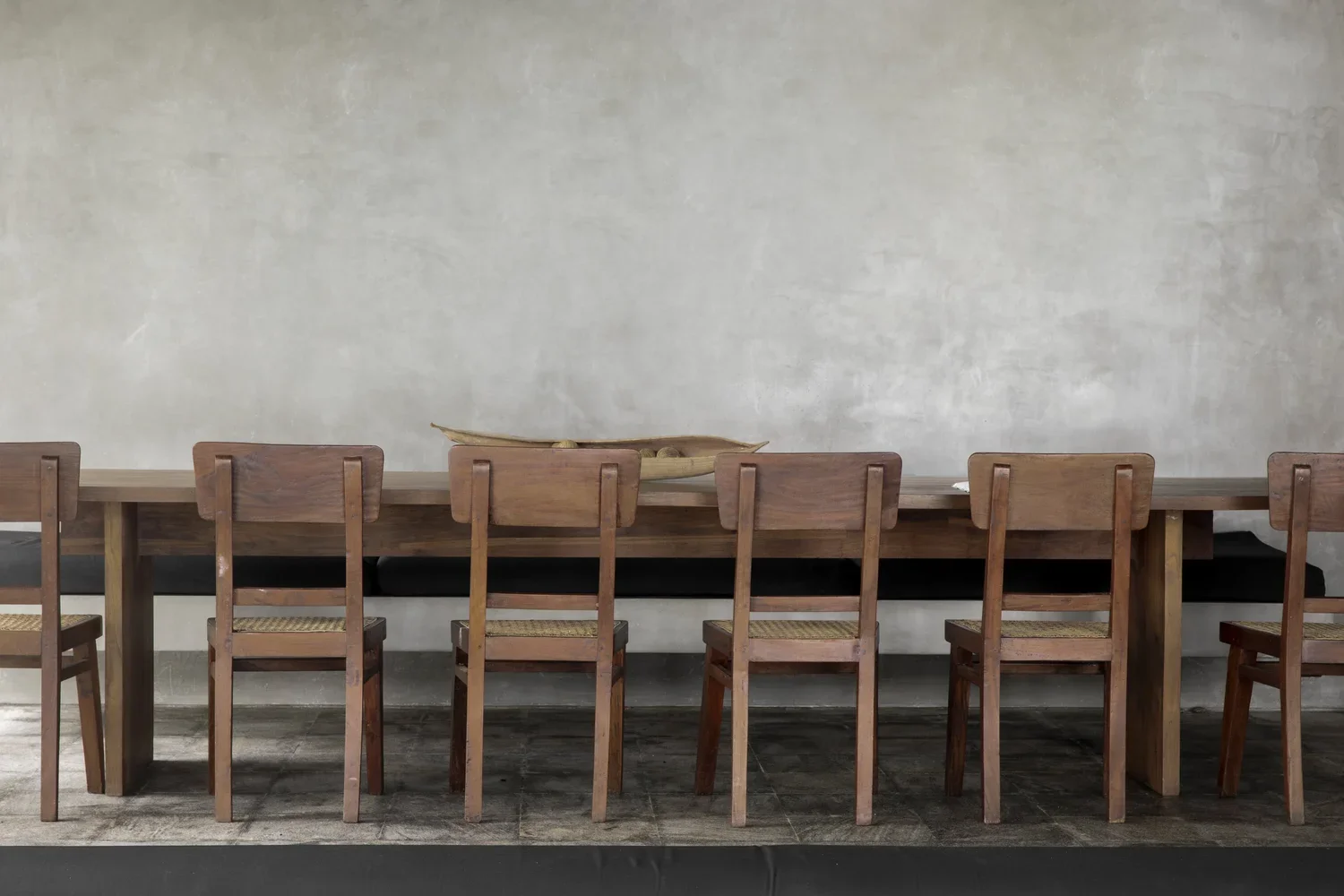
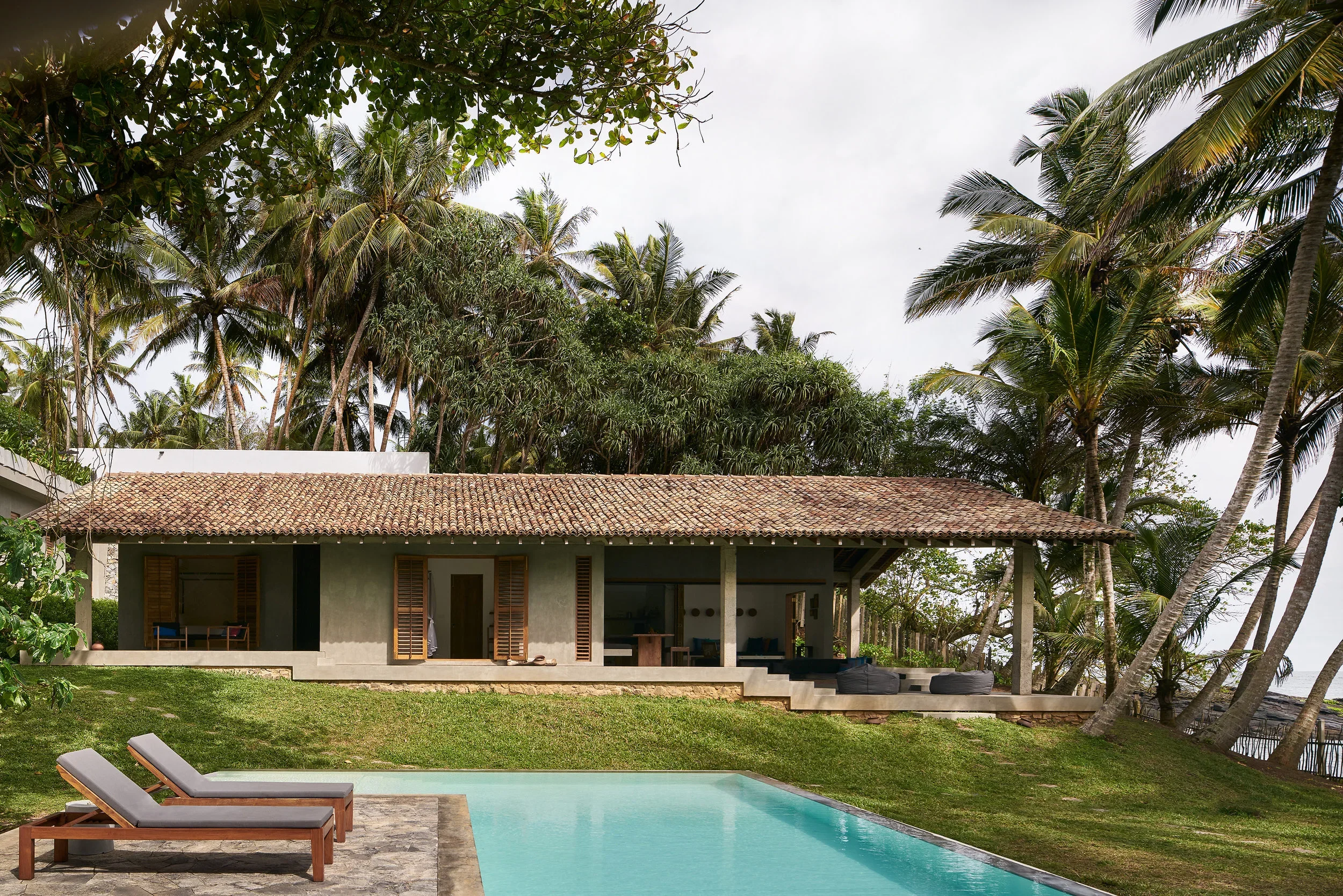
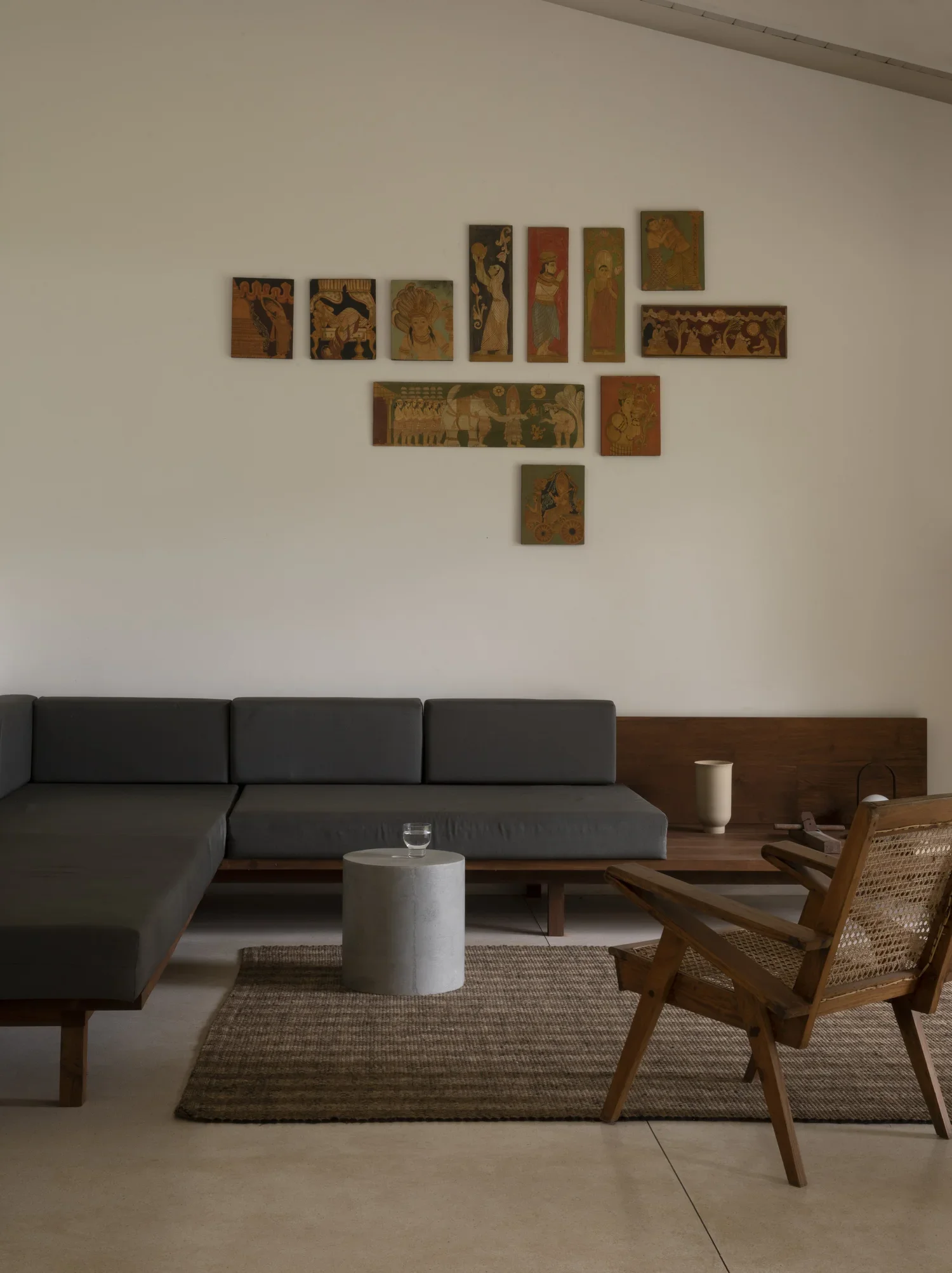
Designed by the Danish studio Norm Architects, K House is a beachfront villa resort on the southern coast. Two buildings, generous roofs, large sliding doors that open the interior to the garden. Indoor and outdoor dissolve without announcement, the same question Bawa spent a lifetime asking, answered from a Scandinavian sensibility. Unlike the Ando and Ban projects, it can be rented: khouse.one.
The knowledge that they're here is part of what makes Sri Lanka interesting to anyone working in architecture. Significant international figures chose to build on this coast, quietly, at the edge of the ocean, in a context that required them to think differently.
ONE MORE NAME
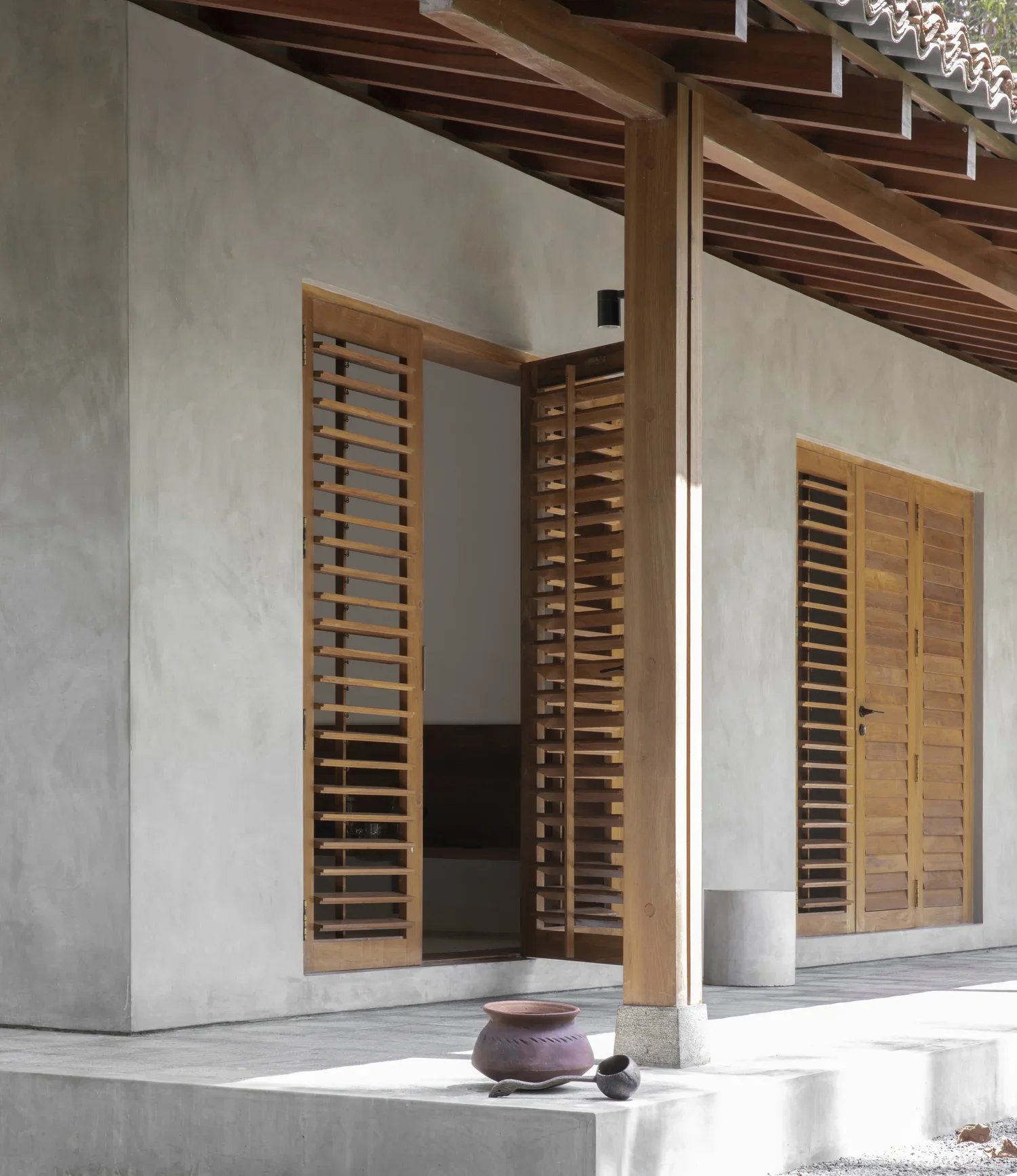
Palinda Kannangara is the most significant contemporary architect working in Sri Lanka today. His residential work continues the conversation Bawa started: vernacular materials, climatic intelligence, spaces in dialogue with landscape. Without repeating it. His projects are not open to the public, but his name is the one to look up if you want to understand where Sri Lankan architecture is heading.
WHAT PEOPLE USUALLY ASK
-
Yes. Number 11, 33rd Lane in Colombo is Bawa's personal townhouse and studio, open for guided tours by appointment. Bookings go through the Geoffrey Bawa Trust.
-
Lunuganga is Geoffrey Bawa's personal country estate near Bentota, which he transformed from a rubber plantation into a garden and residence over fifty years. You can visit for the day or stay overnight on the property.
-
It depends on what you're looking for. For his personal world and spatial logic: Number 11 in Colombo. For landscape and time: Lunuganga. For the full ambition of his late career: Heritance Kandalama near Sigiriya, where you stay overnight inside a building constructed into a rock face.
-
Yes. Ando designed a private residence on the cliffs above Mirissa on the south coast, commissioned by a Belgian industrialist. The house is not open to the public but is partially visible from the road and from the sea.
-
Sigiriya is one of the most architecturally significant sites in South Asia. Beyond the rock palace, the fifth-century water gardens at the base, with symmetric fountains still functional after fifteen centuries, represent a level of landscape and hydraulic design that rewards a slow visit.
-
Palinda Kannangara is Sri Lanka's most prominent contemporary architect. His work continues the tradition of climate-responsive, materially grounded architecture that Geoffrey Bawa established, updated for a contemporary context.
-
Heritance Kandalama near Sigiriya is the essential architectural stay in Sri Lanka. On the south coast, Casa Tikiri in Ahangama offers a well-positioned base for visiting Galle Fort, Mirissa, and Weligama, with accommodation designed around vernacular Sri Lankan building traditions.
Planning a trip to Sri Lanka? Read our complete planning guide.