WHAT TO BUY IN SRI LANKA: THE LOCAL'S LIST
Every souvenir shop in Sri Lanka sells the same things: wooden elephants, batik sarongs, boxes of tea with a lion on the lid. They're not bad exactly. They just have nothing to do with the Sri Lanka people actually live in.
After five years in Ahangama, I've learned what's actually in people's homes here: what's on the kitchen shelf, what's in the bathroom cabinet, what a mother reaches for when her child has a fever. That list looks nothing like the tourist shop shelves.
This is what I'd tell a friend to look for.
FROM THE PHARMACY: AYURVEDIC REMEDIES THAT ACTUALLY WORK
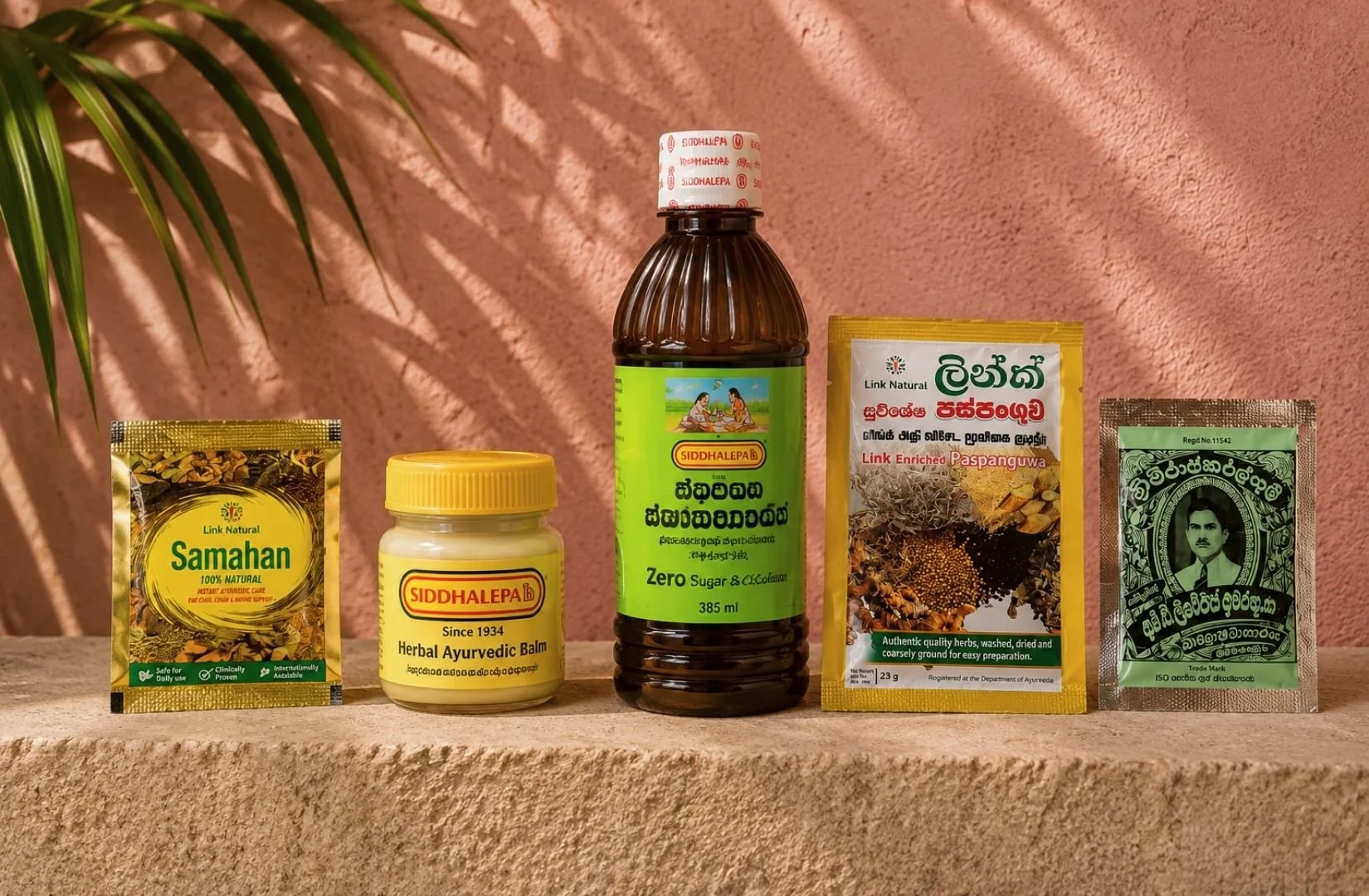
Families across Sri Lanka have been relying on these for generations. They're in every home, on every shelf. They're the first thing people reach for when something feels off. And they cost almost nothing.
Samahan is the one everyone knows. A small sachet of dried herbs that you dissolve in hot water, like a tea but more serious. Sri Lankans drink it at the first sign of a cold, after a long trip, when they're run down. The taste is strong, medicinal, slightly warming. Take a box home. You'll use it.
Siddhalepa Balm is the island's answer to Tiger Balm, but with its own character. It's made from 28 Ayurvedic herbs and it works on headaches, muscle aches, insect bites, and that particular tiredness that settles behind the eyes after a long day. Green tin, distinct smell. You'll find it at every pharmacy for a handful of rupees.
Paspanguwa is what you take when you actually feel ill: fever, body aches, the early stages of flu. It's a traditional herbal formula, usually in tablet form. Sri Lankan mothers swear by it the way Italian grandmothers swear by camomilla.
Asamodagam is ajwain, or carom seeds, and it's the quiet hero of this list. A small pinch steeped in hot water settles the stomach, relieves bloating, helps digestion. After a long flight or a week of eating foods your body doesn't recognize yet, it's the gentlest reset.
Krimiraja Karal Guli are small Ayurvedic pills that Sri Lankans reach for at the first sign of a stomach upset. The name is a mouthful, but the locals know exactly what they are and where to find them. Keep them in your bag for the first few days, when your digestion is still negotiating with the local food.
FROM THE SPICE SHOP: WHAT GOES INTO THE COOKING
Skip the supermarket tea boxes in decorative tins. Go to a spice shop instead. The difference between what you find there and what you find in a European supermarket is not subtle.
Ceylon cinnamon is the real thing. Most cinnamon sold in Europe is cassia, a different plant entirely, with a sharper, almost bitter edge. Ceylon cinnamon, grown here in Sri Lanka, is soft, warm, and slightly sweet. You'll notice it immediately in your morning coffee. Buy the quills, not the powder, they keep their flavour far longer. A small bag costs almost nothing and will change your kitchen for months.
Curry powder, fresh and loose, from a local spice shop is something else entirely compared to the sealed supermarket packets. The colour is deeper, the smell is vivid, and the blend varies from shop to shop depending on the owner's family recipe. Ask for it at a Sinhala grocery, not a tourist market. It's not a souvenir. It's an ingredient.
Kithul treacleis made from the sap of the kithul palm, a dark, thick syrup with a smoky, almost caramel depth to it. Sri Lankans drizzle it over curd (buffalo yogurt) or use it in cooking. It has nothing in common with the golden syrups you find at home. Bring one jar. You'll be back for more.
Maldive fish is dried, cured tuna, and it's the secret behind the flavour of so many Sri Lankan dishes: pol sambol, dhal, kottu. In small quantities it adds an umami depth that's difficult to replicate. You can find it vacuum-packed for travel. It might raise some eyebrows at customs, but it's worth checking the rules before you go.
FROM THE SUPERMARKET: THE EVERYDAY ESSENTIALS
Some of the best things to bring home from Sri Lanka are not in any gift shop. They're in the supermarket aisle, right next to the rice and the washing powder.
Pure coconut oil, cold-pressed and unrefined, is used here for everything: cooking, skincare, haircare. The quality is exceptional and the price is a fraction of what you'd pay for the same thing in Europe labelled "organic extra virgin." Buy the largest bottle you can fit in your bag.
Herbal soaps and body products from Siddhalepa are widely available, affordable, and made with real plant extracts. The neem soap is particularly good. Nothing fancy in the packaging, but the product is honest and effective.
A NOTE ON WHERE TO FIND ALL OF THIS
None of this requires a trip to a specialty store or a tourist market. Pharmacies stock all the Ayurvedic remedies. Local grocery shops and spice sellers have the cinnamon and curry powder. Supermarkets carry the coconut oil and herbal soaps.
If you're staying in Ahangama, we're happy to point you in the right direction. The best spice shop is a short tuk-tuk ride away, and the pharmacy on the main road has everything on this list.
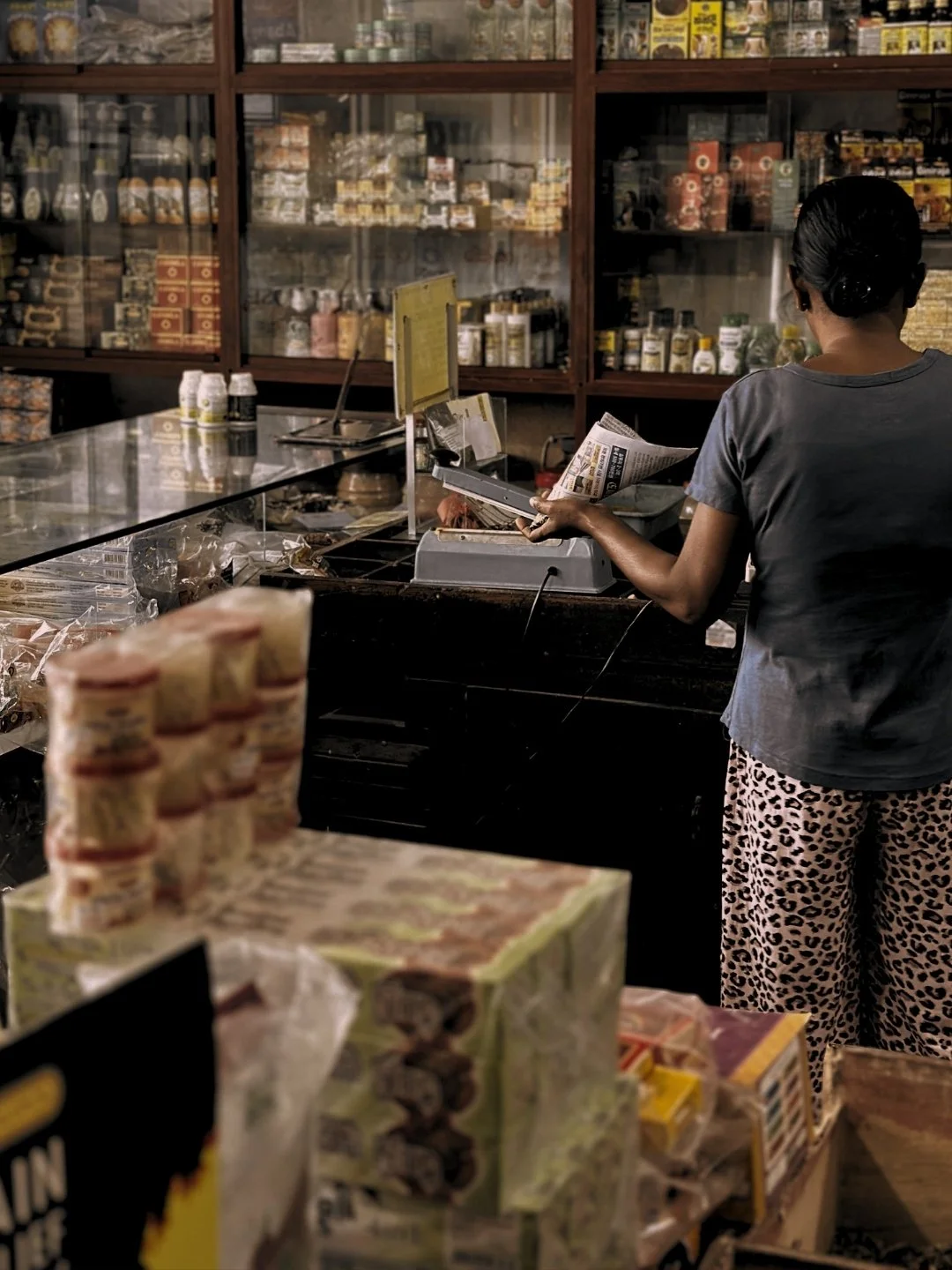
The rule of thumb: if it's wrapped in cellophane and sitting next to a wooden elephant, it's probably not what you're looking for. If it's behind a counter, unlabelled, and the shopkeeper has to weigh it out for you, you're in the right place.
WHY THIS MATTERS
Bringing something home from a trip is about more than the object itself. It's about carrying back a small piece of how people actually live in a place, not just how they present themselves to visitors.
The Samahan in your cupboard, the cinnamon in your coffee, the kithul treacle on Sunday morning: these are things that Sri Lankans have in their homes. When you bring them home too, you're not buying a souvenir. You're borrowing a small habit from a place you loved.
That feels like the right kind of souvenir.
Still planning your trip? Read our complete guide to visiting Sri Lanka.